Legs Diamond: What Happened During 72 Broadway Previews?
72 Previews: Broadway Kept Rewriting Legs Diamond Until Opening Night
On October 25, 1988, Legs Diamond gave its first Broadway preview at the Mark Hellinger Theatre. It did not officially open until December 26. Between those dates, Broadway audiences watched 72 previews—an unusually long period during which the musical was repeatedly rewritten, trimmed and restructured. Two characters who appeared in early previews were gone before opening night.
Then came the number that makes the story even stranger. Before opening, the production had amassed a near-record advance ticket sale of about $10 million. Yet after opening, it lasted only 64 regular performances. When it closed on February 19, 1989, the loss was reported at approximately $5.3 million.
The problem was not that Broadway had refused to give the musical time to fix itself. It had given it more than two months. So Legs Diamond raises a different production question: what happens when previews stop being the final stage of development and become the development process itself?
Peter Allen Put Himself at the Center of the Machine

Peter Allen was not merely the composer of Legs Diamond. He wrote its music and lyrics and starred as Jack Diamond, the Prohibition-era gangster at the center of the story. The book was credited to Harvey Fierstein and Charles Suppon, based on Warner Bros.’ 1960 film The Rise and Fall of Legs Diamond.
That concentration of creative responsibility mattered. Allen was already known as a charismatic entertainer. His stage persona—energetic, theatrical and audience-facing—could naturally carry a concert. A book musical required something different. Jack Diamond had to function not simply as the person audiences came to see but as a character inside a dramatic system. Songs had to advance that system. Scenes had to establish stakes. Supporting characters needed enough dramatic weight to affect him. The audience had to believe the world around the star, rather than simply wait for the star’s next number. That distinction became one of the production’s central tensions.
There Was No Out-of-Town Laboratory

Many Broadway musicals of the period developed outside New York before facing Broadway critics. Legs Diamond did not—after a six-week workshop, it went straight to Broadway. Producer Arthur Rubin later told UPI that attempting the show without an out-of-town tryout had been a mistake. Instead, the production effectively began solving major problems after Broadway previews had already started.
That decision changed the function of the Mark Hellinger Theatre. It was simultaneously a Broadway venue, a rehearsal laboratory, a rewrite room, a technical environment, and a public performance space. Those functions compete with one another. A rehearsal room exists to fail privately. A preview exists to test something largely assembled. A Broadway performance exists to deliver something repeatable. When all three stages overlap, the production has difficulty knowing which version it is actually evaluating.
October 25 Wasn’t the Beginning of the End. It Was the Beginning of the Rewrite.
The first preview took place on October 25. But the production continued changing. And changing. Playbill later described the preview period as one of extensive rewriting and trimming. Harvey Fierstein, a Tony-winning playwright, became involved in rewriting Charles Suppon’s book—UPI described him as effectively functioning as a “show doctor” brought into a production that needed substantial repair.
That meant the musical’s problems were not limited to polishing individual scenes. Its dramatic structure itself remained under examination. This distinction is crucial. Changing a joke is revision. Changing a lyric is revision. Shortening a transition is revision. Reconsidering the book while the complete physical production is already operating is something larger. It is structural reconstruction.
72 Previews Sound Like 72 Opportunities

At first, an extraordinarily long preview period can sound beneficial. More audiences. More feedback. More opportunities to observe where laughter disappears, to identify songs that stall the story, to refine pacing. But there is another possibility. More previews can produce more data without producing better diagnosis.
Suppose Tuesday’s audience reacts poorly to a scene. The scene is rewritten Wednesday. Thursday’s audience responds differently—but several other things have also changed. Was the improvement caused by the rewrite? The performance? Different timing? A shorter scene before it? A stronger audience? Now another change is introduced. The causal chain becomes increasingly difficult to isolate. Iteration works only when the production can learn from each iteration. Otherwise, it is movement without knowledge.
Two Characters Vanished
The original Broadway cast included Christine Andreas and Bob Stillman, both of whom later took part in a 30th-anniversary reunion concert of the show. Removing an entire character partway through a preview run—as reportedly happened during Legs Diamond’s development—is not cosmetic editing. It changes relationships throughout a musical. Dialogue disappears. Exposition must migrate to someone else. Songs may lose their dramatic reason for existing. Entrances change. Scene transitions change. Costume tracks change. Blocking changes. Other characters must absorb narrative functions originally carried by the deleted role.
An audience watching an early preview was not necessarily watching the same dramatic architecture as an audience watching a preview weeks later.
A Preview Ticket Does Not Stop the Production Clock
Theatre development creates a dangerous illusion. Because the production has not officially opened, it can feel as though time has temporarily stopped. It has not. Every preview requires performers, musicians, stagehands, wardrobe, front-of-house staff, theatre operations, advertising, ticketing and management. And the production must simultaneously rehearse the changes it intends to present that evening. This creates two parallel workloads: run tonight’s show, build tomorrow’s show. Those workloads eventually compete.
The Technical Departments Were Rehearsing Too

When a book changes substantially, production departments inherit the consequences. David Mitchell designed the scenery. Willa Kim designed costumes. Jules Fisher designed the lighting, with Peggy Eisenhauer credited as associate lighting designer. Alan Johnson choreographed.
Imagine a character disappears. The scenic department may lose a transition previously covered by that character’s scene. Lighting cues associated with entrances disappear. Costume-change timing changes. A musical number may move. Choreography must connect differently to dialogue. Music may need cuts. Stage management has to issue new pages and cue sequences. Props must change presets. None of these tasks is individually extraordinary—Broadway does them constantly. The problem is frequency. When revisions arrive faster than departments can stabilize them, the production stops rehearsing toward consistency. It rehearses toward survival.
The Most Dangerous Phrase in a Troubled Production
There is a sentence heard in almost every production undergoing heavy revision: “Let’s try it tonight.” Sometimes that sentence saves a show. Theatre cannot be perfected entirely in rehearsal rooms. Audience response matters. But every experiment needs a question. What exactly are we testing? What result would make us keep this version? What result would make us reject it? What else must remain unchanged so we can interpret the result? Without those controls, preview revision becomes improvisational product development. A change happens. Reaction happens. Another change follows. But learning becomes uncertain.
The $10 Million Signal
Meanwhile, the commercial signals looked remarkably strong. UPI reported that Legs Diamond had amassed a near-record advance sale of about $10 million. That figure changes the psychology of a troubled production. If ticket sales are terrible, closing becomes easier to imagine. If audiences have already committed millions of dollars, the production receives a completely different message: people want this show.
But advance sales measure demand for the promise. They do not measure satisfaction with the experience. Peter Allen, gangsters, Broadway spectacle, a major theatre, a new musical—those ingredients could sell tickets before audiences knew whether the dramatic machinery actually worked. The production therefore possessed one of live entertainment’s most dangerous combinations: strong market demand and unresolved product problems.
Opening Night Finally Froze the Show

December 26 arrived. After 72 previews, Legs Diamond officially opened. At some point every commercial production must stop behaving like a workshop. Opening night creates that boundary. The press reviews the production that exists. Marketing can no longer describe only potential. The production becomes a finished public product. The problem is that 72 previews do not guarantee readiness. Time and progress are not identical. A production can work for two months and still be solving the wrong problem.
Critics Could Finally Review the Same Show
The reviews were unanimously negative, according to UPI. But focusing only on critics misses the more measurable commercial evidence that followed. Playbill’s historical gross records show the production ultimately grossed about $5.9 million, with average capacity across the run of roughly 63%. By its final weeks, capacity had fallen into the low-40% range—UPI reported the Hellinger was filling to less than 40% of capacity by the time the show closed.
This matters because it separates two different narratives. One narrative says critics destroyed the show. The other asks whether audiences sustained it once the advance-sale reservoir began to drain. The weekly numbers point toward a production unable to maintain the demand with which it had entered Broadway.
Advance Sales Can Hide the Real Clock
A large advance is normally celebrated as security. But it can also delay recognition of a problem. For several weeks, respectable grosses may partly reflect decisions audiences made before reviews and word of mouth existed. The production therefore has a financial buffer. That buffer is useful. But it can create a false impression that the show has achieved sustainable demand.
The real test arrives later: are new customers replacing the customers who purchased before opening? Legs Diamond eventually faced that test. The advance had bought time. It had not bought longevity.
Peter Allen Cut His Own Salary
By the end, the financial pressure had become severe. UPI reported that Allen reduced his weekly salary from $20,000 to $5,000 and waived percentage rights in an attempt to help keep the production operating; the producers waived percentage rights as well. That is a striking moment. The star, composer and lyricist was no longer simply protecting an artistic project. He was participating directly in its financial survival.
Yet salary concessions cannot solve an audience-retention problem. They can lower burn rate. They can extend runway. They can buy additional weeks. But they cannot create demand. This distinction appears constantly in troubled entertainment projects. Cost reduction is not the same as product repair.
$5.3 Million Was Gone

On February 19, 1989, Legs Diamond closed. IBDB records 64 regular performances after its 72 previews. UPI reported a producer loss of approximately $5.3 million. The ratio is almost surreal: 72 previews, 64 performances. The production spent longer publicly preparing to become a finished Broadway musical than it spent operating as one. That inversion is the real X-FILES story.
The Show Still Earned Three Tony Nominations
Failure was not evidence that every component failed. At the 1989 Tony Awards, Legs Diamond received three nominations: Julie Wilson for Featured Actress in a Musical, Willa Kim for Costume Design, and Alan Johnson for Choreography.
This is important. Troubled productions often contain excellent work. Costumes can succeed. Choreography can succeed. Performers can succeed. Individual songs can survive. The production itself can still fail. A musical is not the arithmetic average of its departments. It is the interaction among them.
“When I Get My Name in Lights” Outlived the Show
Peter Allen’s score included “When I Get My Name in Lights,” which remained part of the musical’s identity long after the original production closed, alongside numbers like “Sure Thing Baby” and “Say It Isn’t So.” The original cast recording also preserved the score, and the songs later found new life woven into The Boy from Oz, the biographical jukebox musical about Allen’s own life.
That again complicates the simple word “flop.” If useful material survives, what failed? Not necessarily the song. Not necessarily the performer. Not necessarily the costume. Not necessarily the choreography. What may have failed was the configuration. Production is configuration. The right elements in the wrong relationship can still produce the wrong experience.
The Mark Hellinger Never Hosted Another Broadway Musical

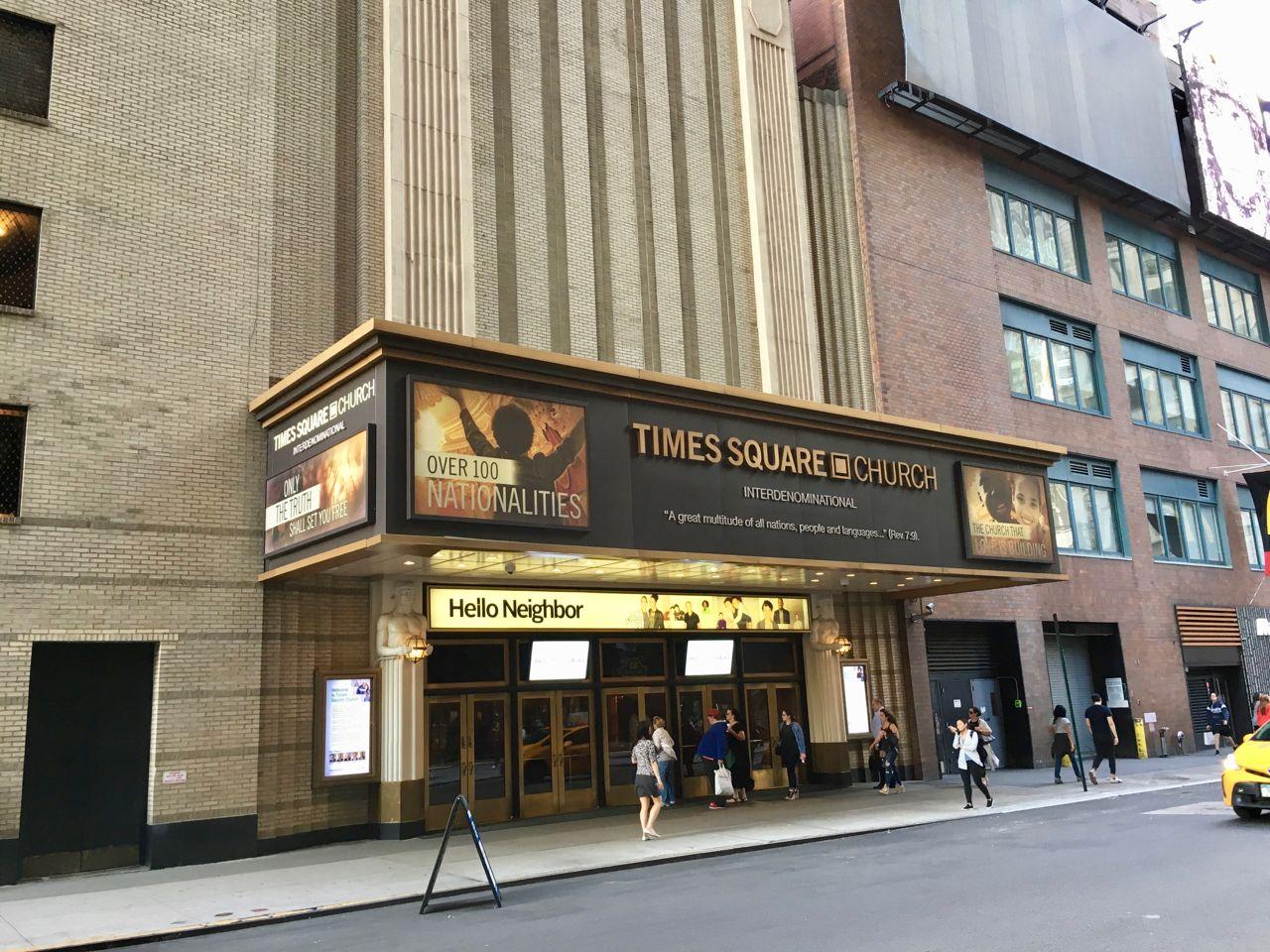
There is an extraordinary epilogue. Legs Diamond became the last Broadway production at the Mark Hellinger Theatre before the building was leased to the Times Square Church. A theatre associated with Broadway history closed that chapter with a musical that itself could not find stability. The symbolism is almost too perfect. A show spent 72 previews trying to become permanent. The building hosting it was about to leave Broadway altogether.
The Lesson Is Not “Use an Out-of-Town Tryout”
Arthur Rubin later said opening cold on Broadway had been a mistake. That is valuable testimony from someone who actually produced the show. But simply concluding that every musical requires an out-of-town tryout would be too easy. Productions can fail after tryouts. Productions can succeed without them.
The deeper question is what development environment allows a team to make difficult changes before operational pressure overwhelms diagnosis. An out-of-town engagement is one method. Workshops are another. Labs. Invited readings. Staged presentations. Technical residencies. Closed rehearsals with controlled audience testing. The location matters less than the function. A development environment must give the production permission to fail without simultaneously requiring it to perform commercially every night.
A Preview Needs a Hypothesis
For IMMERSIVE LAB, the most useful lesson from Legs Diamond is remarkably practical. Every significant preview change should be written as a hypothesis. Not: the scene isn’t working, rewrite it. Instead: audience attention drops because Jack’s objective becomes unclear after the previous number; we will shorten the scene and clarify his objective before the next song.
Now the production knows what it is testing. After the performance, the team can ask whether the predicted result occurred. This creates a development loop: problem, hypothesis, change, audience test, measurement, decision. Without the hypothesis, the loop becomes: problem, change, reaction, another change. Those systems look similar from backstage. They produce radically different learning.
Freeze Dates Matter
Large productions need another tool that creative teams often resist: freeze dates. At some point, structural change must become expensive by design. Not impossible. Expensive. After the book freeze, changing a scene requires approval because downstream departments are already building against it. After choreography freeze, changes affecting automation require technical review. After cue freeze, new structural revisions require stage management and department-head assessment. Safety changes remain unrestricted. Critical corrections remain possible. But creative experimentation no longer receives zero-cost access to every department. Why? Because changes are never free. Someone downstream always pays.
The Audience Should Not Be Your Rewrite Department
Previews are essential because theatre requires audiences. But the audience should help validate a production. It should not become the mechanism by which the production discovers what production it wants to be. That discovery needs to happen earlier. Legs Diamond entered the Mark Hellinger Theatre with enough unresolved structural material that Broadway previews became a prolonged reconstruction period. Seventy-two previews later, opening night finally arrived. The calendar had advanced. The production had changed enormously. But change itself was never the objective. Clarity was.
Editor’s Take
The most revealing number in Legs Diamond is not the reported $5.3 million loss or even its $10 million advance. It is 72. Modern productions increasingly depend on complex synchronization between creative, technical and operational departments. That makes uncontrolled late revision more dangerous today, not less. A video sequence changed tonight may affect automation, performer tracking, lighting, audio, scenery and safety tomorrow. The solution is not to stop experimenting. It is to make experimentation measurable: define the problem, state the hypothesis, test one meaningful change, evaluate the result and eventually freeze the system. Legs Diamond had extraordinary time in front of Broadway audiences. What it did not have was unlimited time to decide what all those previews were supposed to teach.
References
UPI — Legs Diamond, One of the Biggest Flops in Broadway History
IBDB — Legs Diamond Original Broadway Production
Playbill — Original Cast of Legs Diamond Reunites
Breakfast at Tiffany’s stopped after four previews. Legs Diamond did the opposite: it kept changing for 72. Together, they expose the two extremes of one production decision—when to stop developing and decide what the show actually is.


