Kelly : The $650,000 Broadway Musical That Lasted One Performance
How Kelly Lost Control Before Broadway Even Opened
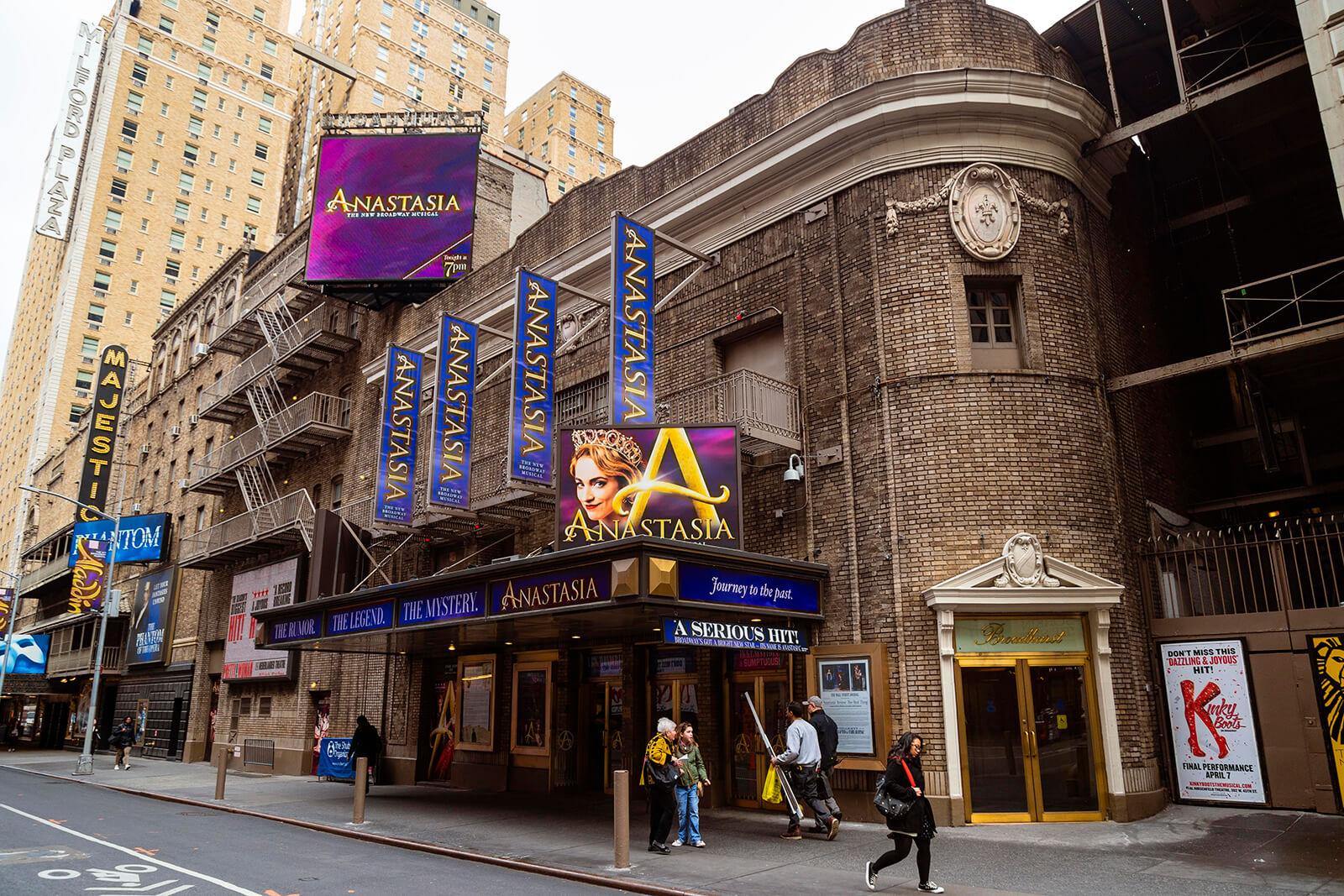
On February 6, 1965, a new musical opened at Broadway’s Broadhurst Theatre. By the end of that night, its Broadway run was finished. Kelly played one regular performance. IBDB records seven previews, an opening date of February 6, and a closing date of February 6. The production had cost about $650,000, a substantial Broadway investment for 1965.
The extraordinary number is not one performance. It is $650,000. Money had been raised. Sets had been built. Costumes had been made. Actors had been hired. A Broadway theatre had been booked. The production had already gone through Philadelphia and Boston. Producers, writers and a major creative team had spent months trying to get the musical to New York.
And during that process, something fundamental happened. The people responsible for Kelly increasingly disagreed about what Kelly was supposed to be. The writers resisted changes. Producers demanded them. New material entered the production. Songs disappeared. A leading performer was removed. The dispute became serious enough to reach court before Broadway opening night.
By the time the curtain finally rose at the Broadhurst, the production had solved one problem—it had reached Broadway. It had not solved the more dangerous one: who actually owned the creative decision when everyone believed the show needed to be saved?
That is what makes Kelly more useful today than its reputation as a legendary Broadway flop. This is not primarily a story about one terrible opening night. It is a case study in creative authority, revision control and the point at which collaboration turns into intervention.
The Story Began With a Man Who May Never Have Jumped

Kelly was inspired by the legend of Steve Brodie, a New Yorker who claimed to have jumped from the Brooklyn Bridge in 1886 and survived. Whether Brodie actually made the jump has long been disputed. But the legend survived. The musical transferred that mythology into a story set in 1880s New York. Its protagonist, Hop Kelly, becomes entangled in a scheme involving gamblers and a proposed Brooklyn Bridge jump.
The creative origin belonged principally to two men: Eddie Lawrence wrote the book and lyrics; Moose Charlap wrote the music. Charlap already had an important Broadway credential—he had written much of the music for the Mary Martin version of Peter Pan before Jule Styne joined that production.
For Kelly, the Broadway team eventually became formidable. David Susskind and Daniel Melnick produced, with film producer Joseph E. Levine associated with the production. Herbert Ross directed and choreographed. Oliver Smith designed the scenery. Freddy Wittop designed costumes. Tharon Musser designed lighting. Hershy Kay handled orchestrations. These were not amateurs accidentally discovering how difficult Broadway could be. There was serious professional experience around the production. That makes what followed considerably more interesting.
Before Broadway, Kelly Still Had Time to Change
The production did not begin its public life at the Broadhurst. It tried out first in Philadelphia for roughly three weeks beginning in late December 1964, then moved to Boston for about half a week in January 1965 before arriving in New York.
That was normal Broadway development practice. An out-of-town tryout gave producers and creators something a rehearsal room could not provide: an audience. Comedy could be timed against real laughter. Songs could be measured against attention. Scenes that looked clear on paper could suddenly become confusing. Transitions could feel slow. Characters could disappear emotionally. A number expected to stop the show might barely register. The creative team could then rewrite before New York critics arrived. In principle, it was an excellent development system.
But a tryout contains a hidden danger. Once an audience exposes a problem, the production must agree on what caused it. If everyone diagnoses the same problem, revision can be precise. If they do not, every solution begins pulling the production in a different direction. That appears to have become central to Kelly.
The Argument Was No Longer About Whether to Change the Show
Accounts of Kelly’s troubled development describe growing tension between Lawrence and Charlap on one side and the producers on the other. The important distinction is that the dispute was not simply: should we revise? It became: who has the right to decide the revision?
Journalist Louis H. Lapham spent 74 days embedded with the production for a 12-page Saturday Evening Post feature published April 24, 1965, at the invitation of producer David Susskind’s own press agent—who reportedly believed the story would become “a textbook on how to produce a play in the American musical theater.” Lapham’s account, later reconstructed by TheaterMania, describes producers and director requesting new scenes and songs during development. Lawrence and Charlap agreed to some requests but resisted the expanding intervention.
That difference is critical. Creative disagreement is normal. Broadway musicals are collaborative machines. A bookwriter may protect narrative logic. A composer protects musical architecture. A director sees pacing and staging. A choreographer sees physical rhythm. A producer sees audience reaction, capitalization and commercial exposure. None of those perspectives is automatically wrong. The production problem begins when there is no accepted mechanism for deciding which perspective wins.
Then Revision Became a Question of Contract
The conflict eventually moved beyond rehearsal-room disagreement. According to reference accounts of the dispute, Charlap and Lawrence were upset enough about changes being made without their consent that they filed suit in New York Supreme Court seeking an injunction to prevent the show from opening. A judge urged the parties toward arbitration rather than litigation.
At that point, Kelly had crossed a remarkable threshold. A creative-development process intended to improve the musical had become a dispute over whether the production had the right to make those improvements at all. Think about what that does to a rehearsal room. Normally, a note produces an artistic question: does this make the show better? Now another question exists simultaneously: are we legally allowed to make this change? And behind that: whose version of the show are we rehearsing? Once those questions enter the room, revision becomes much more expensive than rewriting dialogue. It consumes trust.
New Voices Entered the Rescue Operation
The production’s problems attracted additional creative intervention. During the troubled tryout period, “show doctors” Leonard Stern and a then-far-less-famous Mel Brooks were brought in to help. Roles played by Ella Logan, Jack Creley and Avery Schreiber were subsequently cut on their recommendation.
That detail illustrates a recurring pattern in troubled productions. When the original team cannot solve a problem, additional expertise is brought in. A new writer. A show doctor. A new choreographer. A consultant. A producer with stronger authority. Sometimes this saves a production. But every additional creative voice introduces another diagnosis. If one consultant thinks the problem is comedy, another thinks it is the leading character, the director thinks it is pacing and the writers think the producers have misunderstood the concept, the show can accumulate solutions to different problems simultaneously. Revision then stops simplifying. It begins layering.
Every Rewrite Sends a Shockwave Through the Stage

Imagine a musical number is cut three weeks before Broadway. The immediate assumption might be: good, the show is shorter. But production sees something else. The stage manager loses a sequence of cues. Lighting removes and renumbers states. Wardrobe loses costume-change time. Scenery may need a new transition. Musicians receive revised pages. Actors must relearn entrances. Props move to new presets. Crew tracks change. The scene before the deleted number now connects directly to something that may originally have happened ten minutes later. That connection may not work. So another scene needs rewriting. Then another transition needs modification. One creative change can propagate through the entire production. The later in development it occurs, the more expensive the propagation becomes.
This is why troubled shows sometimes appear to be changing constantly without becoming clearer. The production is spending enormous energy merely keeping itself synchronized with the latest version.
The Production Had Entered Revision Debt
Software engineers have a useful concept: technical debt. A shortcut solves an immediate problem but creates future work. Live production has an equivalent: revision debt. Change one scene quickly and you may create three transitions that need repair. Replace one performer and relationships across the show must be recalibrated. Cut one song and choreography, wardrobe, lighting and scene-change timing may all move. Add a joke and you may change the rhythm of the scene containing it. None of those decisions is necessarily wrong. The danger is accumulation. Eventually the production spends more rehearsal time managing previous changes than evaluating whether the newest change actually improves the audience experience. At that point, revision has become its own production system. And Kelly was running out of time.
February 1: Broadway Audiences Entered the Process

IBDB and Playbill record the first Broadway preview on February 1, 1965. Opening night was February 6. That left only days of Broadway previews. There is a small historical-source complication worth noting: IBDB and Playbill list seven previews, while Ovrtur lists five and explicitly notes that seven is sometimes reported. For publication purposes, the Broadway League/IBDB figure of seven is used here, while recognizing the archival discrepancy.
The important point is not whether the number was five or seven. It is how little runway remained. Months of disagreement, out-of-town changes, personnel intervention and legal conflict had now arrived at Broadway with opening night approaching almost immediately. The deadline no longer cared whether the creative argument had been resolved.
Broadway Has a Brutal Clock
A commercial production eventually reaches a moment when development collides with operations. Tickets have been sold. Advertising is running. The theatre is booked. Payroll continues. Opening-night guests have been invited. Critics are coming. Investors expect a production. At that point, postponement itself becomes expensive.
This creates one of the hardest decisions in live entertainment: when is continuing more dangerous than stopping? The closer a project gets to opening, the harder cancellation becomes psychologically. Hundreds of people have worked on it. Money has already been spent. Sets physically exist. Costumes are hanging backstage. The marquee is installed. Publicity has been released. The production feels real. And because it feels real, stopping can feel irrational. This is the sunk-cost trap of theatre. Money already spent cannot prove that more money should be spent. Rehearsal time already consumed cannot prove that opening is the correct decision. A completed set cannot prove that the show is ready.
$650,000 Had Become More Than Money

When Susskind, Melnick and Levine took over as producers in April 1964, Levine financed $250,000 of a $400,000 starting budget, with the balance coming from Columbia Records and six other investors. The final cost climbed to a then-record $650,000, rising through a structure tied to a percentage of ticket sales for each of the show’s profitable weeks—weeks that, in the end, never happened. Levine emerged as the biggest single loser, followed by Melnick and Susskind, who had invested $150,000 between them. The New York Times reported that industry figures could not recall any other Broadway musical of comparable expenditure becoming a casualty so quickly.
In 1965, that was a serious Broadway capitalization. But capitalization produces psychological pressure as well as financial pressure. Every additional dollar makes withdrawal harder. The thought becomes: we have come too far, we can fix it, one more rewrite, one more rehearsal, one more replacement, one more preview, one more meeting, one more intervention. This is how an investment can quietly transform into a reason for continuing the investment. Production management needs a mechanism powerful enough to interrupt that logic.
Opening Night Became Closing Night

On February 6, 1965, Kelly officially opened at the Broadhurst Theatre. It also closed. One performance. The failure became news partly because of its scale. A Broadway musical carrying hundreds of thousands of dollars of investment had survived exactly one official performance.
Yet the one-performance statistic can distort our understanding. The production did not really fail in one night. It had been making decisions for months. Opening night merely made those decisions visible.
The Most Expensive Failure May Have Been Decision Architecture
It is tempting to ask who was right. Were Lawrence and Charlap protecting their work? Were producers correctly identifying weaknesses the writers refused to acknowledge? Did outside intervention damage the original concept? Would the authors’ preferred version have succeeded? Historical accounts contain competing interpretations, and the commercial fate of a hypothetical untouched version cannot be known.
That is not the most productive question. The production lesson is independent of assigning blame. A large creative project needs a defined answer to four questions: who can propose a change? Who evaluates it? Who has final creative authority? At what point does the production freeze the change? If those answers remain ambiguous, conflict is almost guaranteed once pressure rises.
Creative Authority Is a Production System

People often treat artistic authority as a matter of personality. Strong director. Powerful producer. Protective writer. Demanding star. But authority should be designed structurally. Consider a modern stadium concert. The lighting designer cannot independently change the show length. The video department cannot add a five-minute sequence without consequences. Automation cannot alter performer blocking without rehearsal. Rigging cannot accept an unplanned load because someone thinks it looks better. Departments are interconnected. Changes therefore require defined approval paths.
A Broadway musical needs the same discipline for creative decisions. The fact that the material is artistic does not make change control less necessary. It makes it more necessary because artistic changes are difficult to quantify.
A Production Needs a Creative Constitution
For a high-risk production today, IMMERSIVE LAB would establish a Creative Constitution before large-scale fabrication or technical integration begins. Not a 100-page manual. One page. It should define: Core Promise (what experience are we selling the audience?), Non-Negotiable Idea (what must survive every rewrite?), Decision Owner (who has final authority over creative disputes?), Change Path (how is a major revision proposed, tested and approved?), Technical Impact Check (which departments must sign off before implementation?), Freeze Date (when do structural changes stop except for safety or critical failure?), and Stop Condition (what evidence would make us postpone rather than continue?).
This would not eliminate disagreement. It would prevent disagreement from becoming operational chaos.
There Was Still Something Worth Saving
One reason Kelly remains fascinating is that total failure is rarely total. Its score did not disappear completely. The song “I’ll Never Go There Anymore” survived beyond the production, and Playbill later noted the score’s continued interest when discussing recordings and the 1998 York Theatre Company presentation in its “Musicals in Mufti” series, which allowed the material to be reconsidered decades after the original Broadway disaster.
That creates an important distinction. A production can fail while individual creative elements remain valuable. A song can work inside a show that does not. A scenic idea can be brilliant inside a confused production. An actor can give an excellent performance in a commercial failure. Theatre is a system. Its success depends on relationships between parts, not simply the quality of each part.
One Performance Is the Wrong Number to Remember
The most famous number attached to Kelly is 1. One Broadway performance. But production professionals should remember another number: the number of major decisions made before that one performance ever happened.
That is where the real case study exists. A Broadway collapse is rarely created at 8:00 p.m. on opening night. It is built incrementally. A disagreement without resolution. A rewrite without a shared objective. A change without impact analysis. An intervention without clear authority. A deadline that becomes more important than diagnosis. A budget that makes withdrawal psychologically harder. And finally, an opening that has become inevitable simply because everyone has already traveled too far to imagine stopping. The audience only sees the final version. Production history contains everything that happened before it.
Editor’s Take
Kelly is usually remembered as the $650,000 musical that opened and closed on the same night. The more important failure happened before the Broadhurst curtain rose. The production lost a shared mechanism for deciding what should change, who could change it and what version everyone was ultimately trying to build. Modern productions are technologically far more complex than Kelly, which makes this lesson even more urgent. When creative revision affects automation, video, scenery, sound, choreography, performers, safety and budget simultaneously, creative authority can no longer remain an informal argument among powerful personalities. It has to be engineered into the production itself.
References
IBDB — Kelly Original Broadway Production
TheaterMania — The Saga of Kelly
Nick & Nora would later survive 71 previews while searching for a version that worked. Kelly presents the opposite extreme: what happens when the fight over how to fix a musical consumes the production before Broadway has even begun.


