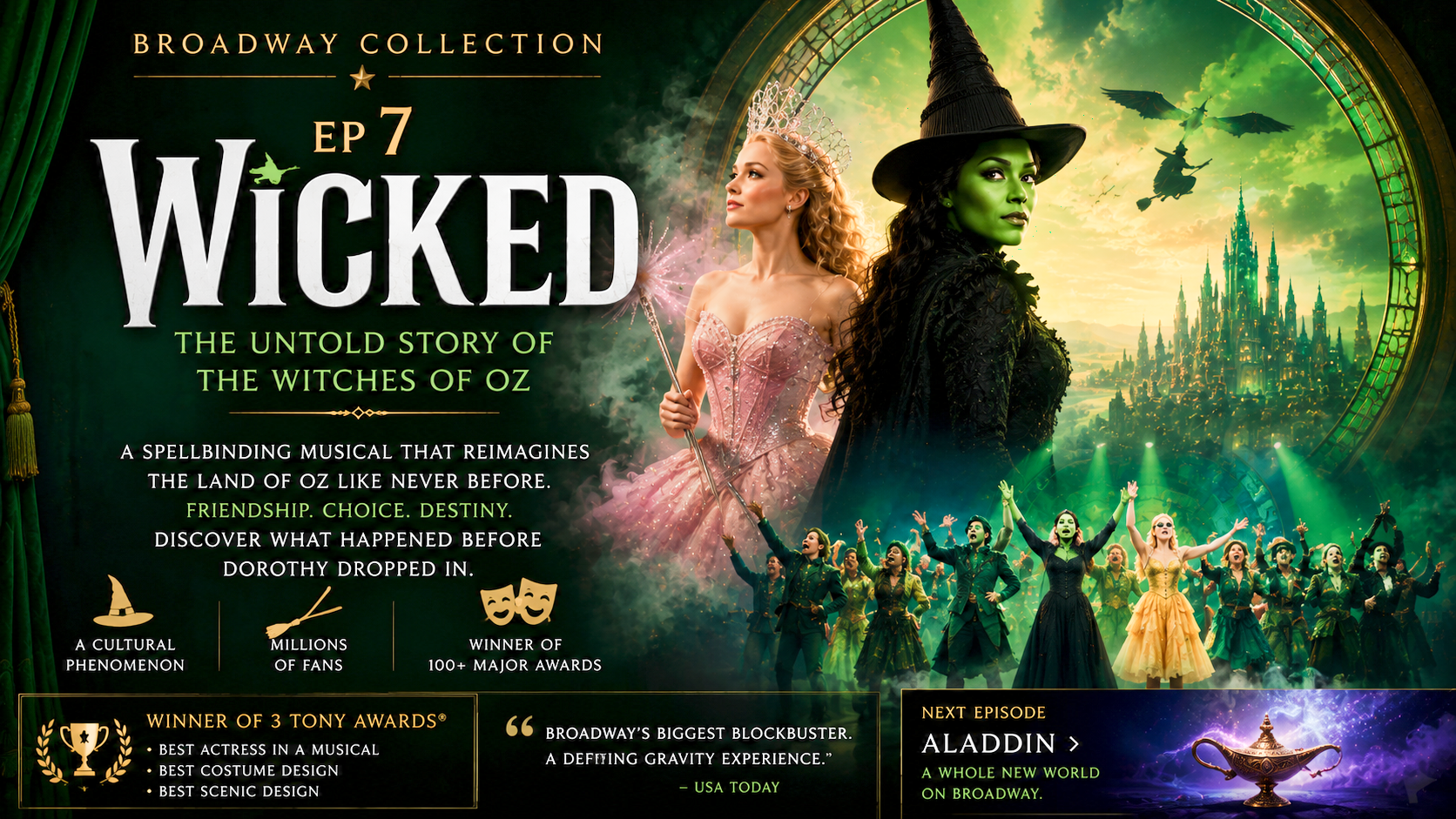
Demi Moore Owned the Rights First

Before Stephen Schwartz ever wrote a note of the score, the rights to Gregory Maguire’s 1995 novel belonged to Demi Moore’s production company, Moving Pictures, which had optioned it as a straight film with Moore herself attached to play Elphaba. Author Gregory Maguire has since joked about the pitch he imagined at the time: “I can imagine Demi Moore naked and green on the cover of Vanity Fair.” Whoopi Goldberg and Claire Danes had also separately pursued the rights in the book’s first six months alone, with Michelle Pfeiffer, Emma Thompson, and Nicole Kidman all considered for Glinda in various versions of the film that never got made.
Schwartz first heard about the book from a friend and had to trace the rights through Moore’s company to then-Universal executive Marc Platt, spending roughly a year just convincing Platt to let him adapt it as a stage musical instead of the film Universal had been developing. Platt eventually agreed and produced the Broadway musical himself—then, decades later, produced the 2024 and 2025 film versions as well, closing a loop that started with an actress who never got to play the role.
Two Women, Two Very Different Careers Since

When Wicked opened on Broadway in 2003, it introduced Idina Menzel and Kristin Chenoweth to a mainstream audience for the first time; by some estimates the musical has since been seen by roughly 50 million people worldwide. The show’s success launched both actresses into film and television careers that neither could have fully predicted from a Broadway stage—a level of crossover fame unusually large even by musical-theatre standards.
A Song Built to Launch a Star Upward, Literally

Defying Gravity ends Act One with Elphaba rising above the stage on a flying rig while the orchestra builds to a sustained high note that has become something of a rite of passage for the role—an actress’s ability to nail that final note live has become a recurring subject of fan debate and viral video clips over two decades of productions. The moment works because it fuses a technical stage effect directly to a character decision: Elphaba isn’t flying to show off, she’s flying because she’s just decided to stop trying to win a system’s approval.
A Novel Written as Political Allegory, Softened for the Stage

Maguire’s original novel is considerably darker and more explicitly political than the musical, built around themes of authoritarianism, propaganda, and animal rights persecution in Oz, with the Wizard functioning as a fascist-coded dictator. Book writer Winnie Holzman and Schwartz kept the central reframing—the “villain” has a legitimate grievance the official story never tells—while restructuring the tone around the friendship between Elphaba and Glinda, making the musical accessible to family audiences without abandoning the novel’s core argument about who gets to write history.
Editor’s Take
The detail that sticks with us is how close this musical came to being a Demi Moore film instead. If Universal had greenlit that version in the late 1990s, there’s no Idina Menzel origin story, no 20-plus years of the same Broadway run, and no cultural moment for a song most people can now sing along to whether or not they’ve seen the show. Sometimes the property that becomes a phenomenon is the one whose first, more obvious version never got made.
References & Further Reading
Wicked — Official Broadway Website
Internet Broadway Database (IBDB)
Next: Aladdin.


