The Musical That Changed the World

For nearly four decades, The Phantom of the Opera has remained one of the most successful and beloved musicals in history. Since its premiere in London’s West End in 1986 and its Broadway debut in 1988, the production has captivated more than 160 million audience members across over 45 countries.
While countless musicals have appeared and disappeared over the years, The Phantom of the Opera continues to symbolize the highest level of theatrical excellence. It is not simply a stage production—it is a complete artistic experience where music, architecture, lighting, costume design, engineering, and storytelling merge into one unforgettable performance.
This remarkable longevity is no accident. It is the result of timeless music, emotionally compelling characters, and spectacular stagecraft that still amazes audiences today.
A Story Beyond Time

At the heart of the musical lies a haunting love story.
Deep beneath the Paris Opera House lives a mysterious musical genius known only as The Phantom. Hidden from society because of his disfigured appearance, he becomes obsessed with the young soprano Christine Daaé, nurturing her extraordinary talent while secretly longing for her love.
Christine, however, is drawn toward her childhood friend Raoul, creating one of theatre’s most emotional love triangles.
Rather than portraying a simple villain, the Phantom represents loneliness, rejection, obsession, and the universal desire to be accepted. These deeply human emotions continue to resonate with audiences across generations.
Andrew Lloyd Webber’s Timeless Music

One of the greatest reasons for the musical’s enduring success is the unforgettable score composed by Andrew Lloyd Webber.
Iconic songs such as:
- The Phantom of the Opera
- Think of Me
- Angel of Music
- Music of the Night
- All I Ask of You
- Masquerade
have become classics that transcend the theatre itself.
The title song, with its powerful organ introduction and dramatic orchestration, remains one of the most recognizable pieces of musical theatre ever written.
Even people who have never seen the production often recognize its music instantly.
Stage Technology That Revolutionized Live Entertainment

Few productions have influenced stage technology as profoundly as The Phantom of the Opera.
Its legendary effects include:
- The crashing chandelier
- The underground lake sequence
- Hundreds of moving candles
- Massive automated scenery
- Seamless scene transitions
- Elaborate costume transformations
- Precision-controlled lighting systems
When the chandelier dramatically falls toward the audience, the entire theatre erupts in excitement. Even decades after its debut, the effect continues to create one of the most memorable moments in live entertainment.
The production demonstrates how engineering and storytelling can work together to create emotional impact.
Why Audiences Continue to Return

Many successful productions enjoy popularity for a few seasons.
Very few survive for decades.
The Phantom of the Opera continues to attract audiences because it offers something beyond entertainment. Every performance delivers emotional depth, breathtaking visuals, world-class music, and extraordinary craftsmanship.
Whether someone attends for the first time or the tenth time, the experience feels timeless.
Its themes of love, beauty, fear, isolation, forgiveness, and redemption remain universally relevant regardless of culture or language.
Global Cultural Impact
The influence of The Phantom of the Opera extends far beyond Broadway and London’s West End.
International productions have been staged throughout Europe, Asia, Australia, South America, and the Middle East.
Millions of performers, designers, directors, and producers have drawn inspiration from its artistic achievements.
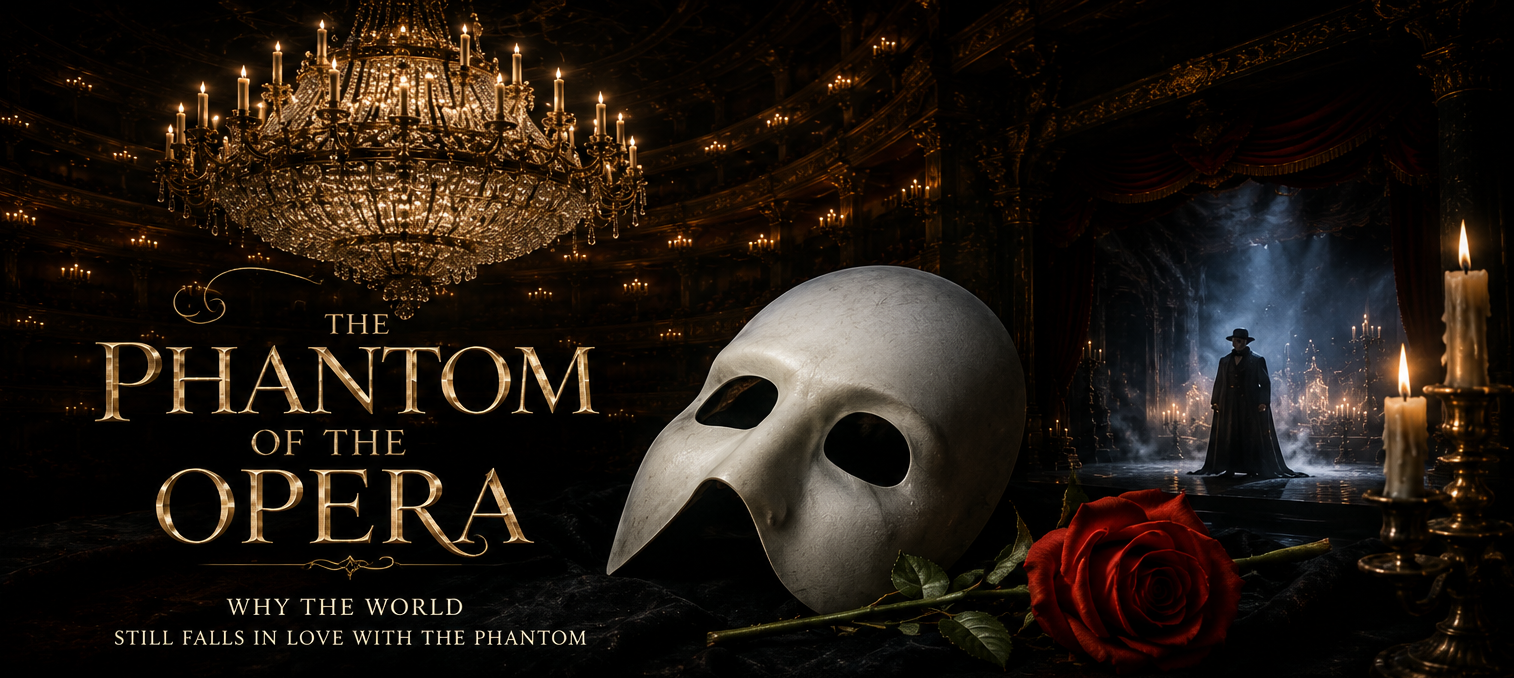
Its iconic white mask has become one of the most recognizable symbols in performing arts worldwide.
Even today, many newly produced musicals are measured against the standards established by The Phantom of the Opera.
What Future Producers Can Learn

For anyone working in immersive entertainment, media art, or large-scale productions, The Phantom of the Opera offers valuable lessons.
The musical proves that:
- Great storytelling never becomes outdated.
- Emotional connection is more powerful than technology alone.
- Spectacular visual effects should support the narrative.
- Music creates lasting memories.
- Every technical element should serve the audience’s emotional journey.
These principles remain essential for the next generation of immersive experiences.
Final Thoughts
Nearly forty years after its world premiere, The Phantom of the Opera continues to define what great musical theatre can achieve.
Its combination of unforgettable music, timeless storytelling, groundbreaking stage technology, and emotional depth has secured its place as one of the greatest productions in entertainment history.
As audiences continue to seek meaningful live experiences, The Phantom of the Opera reminds us that true masterpieces never fade—they simply inspire new generations.
댓글 남기기