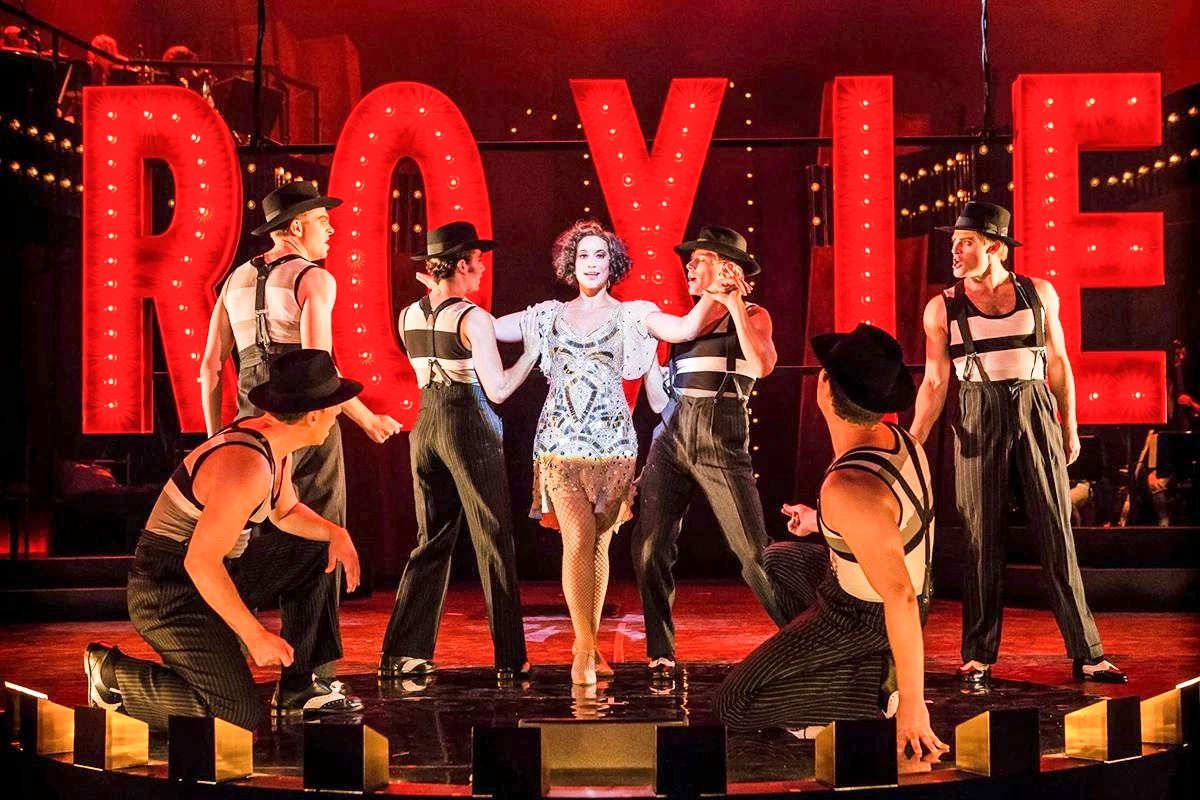
Why Chicago Is Still Broadway’s Most Stylish Musical
How a True Crime Story Became One of the Greatest Musicals Ever Created

Some musicals tell beautiful love stories.
Others celebrate hope and courage.
Chicago does something entirely different.
It transforms crime, celebrity, media manipulation, and human ambition into one of the most entertaining productions ever created for the stage.
Originally premiering on Broadway in 1975, Chicago found new life with its legendary 1996 revival, which continues to captivate audiences nearly three decades later.
Today it stands as the longest-running American musical in Broadway history and one of the most successful productions ever staged worldwide.
What makes this achievement even more remarkable is that the story was inspired by real events.
Behind the glamorous costumes, jazz music, and dazzling choreography lies a powerful social commentary that feels just as relevant today as it did one hundred years ago.
A True Story Hidden Behind the Spotlight

The origins of Chicago can be traced back to two sensational murder trials that shocked the city of Chicago in 1924.
Two women murdered their lovers.
Instead of becoming villains in the public eye, they became celebrities.
Newspapers competed for headlines.
Lawyers turned courtrooms into theatrical performances.
Public opinion became more influential than facts.
Journalist Maurine Watkins, who covered both trials, was fascinated by the growing relationship between crime, media, and celebrity culture.
Her observations became the stage play Chicago, which later inspired the musical created by John Kander, Fred Ebb, and legendary director and choreographer Bob Fosse.
Almost a century later, the story feels surprisingly modern.
Social media, viral news, and celebrity culture continue to blur the line between truth and entertainment.
That timeless relevance is one of the reasons why Chicago has never lost its audience.
Roxie Hart and the Performance of Fame
Unlike traditional musical heroines, Roxie Hart is neither innocent nor heroic.
She dreams of becoming famous.
When she murders her lover, she quickly discovers that public attention can be more valuable than justice itself.
With the help of charismatic lawyer Billy Flynn, Roxie transforms her criminal trial into the greatest performance of her life.
Every interview becomes another scene.
Every newspaper headline becomes another spotlight.
Every courtroom becomes another stage.
Rather than asking whether Roxie deserves sympathy, the musical asks a much more uncomfortable question.
How easily can society turn criminals into celebrities?
That question remains just as powerful in today’s digital world as it was during the Jazz Age.
Minimal Stage Design, Maximum Impact

One of the most fascinating aspects of Chicago is its visual simplicity.
Unlike modern productions filled with giant LED screens, automated scenery, and elaborate visual effects, Chicago relies on almost nothing except performers, lighting, costumes, and a live jazz orchestra.
The orchestra itself becomes part of the stage.
The actors remain the center of every scene.
Black costumes, dramatic red lighting, elegant chairs, and carefully choreographed movement create an atmosphere that feels sophisticated rather than extravagant.
This minimalist approach allows audiences to focus entirely on performance, making every gesture, every look, and every dance movement feel meaningful.
It is proof that great theatre is created through artistic vision rather than expensive technology.
Bob Fosse Changed the Language of Musical Theatre

It is impossible to discuss Chicago without recognizing the extraordinary influence of Bob Fosse.
More than a choreographer, Fosse reinvented the visual language of Broadway.
His signature style—tilted hats, sharp shoulder movements, bent knees, isolated hand gestures, and controlled body language—became instantly recognizable around the world.
Rather than relying on large, energetic dance numbers, Fosse created tension through precision.
Every movement had purpose.
Every pause carried emotion.
His choreography was sophisticated, sensual, and psychologically expressive, perfectly matching the themes of ambition, manipulation, and desire that define Chicago.
Even decades after his work first appeared on stage, choreographers across the world continue to study what is now known simply as “the Fosse style.”
Jazz That Never Grows Old

Music is another reason why Chicago has remained timeless.
Composers John Kander and Fred Ebb created a score that perfectly captures the excitement of the Jazz Age while remaining fresh for modern audiences.
Songs including:
- All That Jazz
- Cell Block Tango
- Razzle Dazzle
- When You’re Good to Mama
- Nowadays
have become Broadway classics.
Each number does far more than entertain.
They reveal character, expose hidden motivations, and move the story forward without slowing its pace.
Unlike traditional musical ballads, the score of Chicago embraces irony, humor, and theatrical elegance.
The music itself becomes another narrator, constantly reminding audiences that life, crime, politics, and fame are often part of the same performance.
The IMMERSIVE LAB Perspective
From a creative director’s perspective, Chicago represents one of Broadway’s greatest lessons in theatrical storytelling.
It proves that spectacular theatre does not require enormous budgets or overwhelming technology.
Instead, it demonstrates how lighting, choreography, costume design, music, and exceptional performers can completely transform a simple stage into an unforgettable experience.
Today’s entertainment industry often focuses on LED displays, projection mapping, artificial intelligence, and immersive technology.
These tools are exciting.
However, Chicago reminds us that technology should never become the star of the performance.
The audience remembers emotion.
The audience remembers great performers.
The audience remembers unforgettable stories.
Technology should always support those elements—not replace them.
For creators developing immersive experiences, Chicago remains an essential masterclass in visual storytelling.
Why Chicago Still Feels Modern

Nearly fifty years after its Broadway premiere, Chicago feels more relevant than ever.
Celebrity culture continues to dominate headlines.
Media still shapes public opinion.
Fame is often rewarded more quickly than honesty.
Although the costumes reflect the 1920s, the ideas belong to the present.
That rare ability to speak across generations explains why Chicago continues attracting audiences from every corner of the world.
Great musicals entertain.
Exceptional musicals make us think.
Chicago does both.
Final Thoughts
There are musicals with larger stages.
There are musicals with more elaborate visual effects.
There are musicals with bigger orchestras.
Yet few productions possess the elegance, confidence, and timeless style of Chicago.
Its brilliant choreography, unforgettable jazz score, minimalist stage design, and sharp social commentary have secured its place among Broadway’s greatest achievements.
Long after the final curtain falls, audiences leave the theatre with one unforgettable realization:
Sometimes the greatest performance does not happen on stage.
It happens in the world around us.
Director’s Note
As a creative director, I believe Chicago remains one of the finest examples of theatrical minimalism.
It demonstrates that extraordinary performances are created not through technology, but through artistic vision, disciplined choreography, compelling storytelling, and exceptional performers.
Every theatre creator should experience Chicago not only as entertainment, but also as a masterclass in stage direction and visual storytelling.
Next Episode
Mamma Mia!
How ABBA’s Greatest Hits Became the World’s Happiest Musical
댓글 남기기