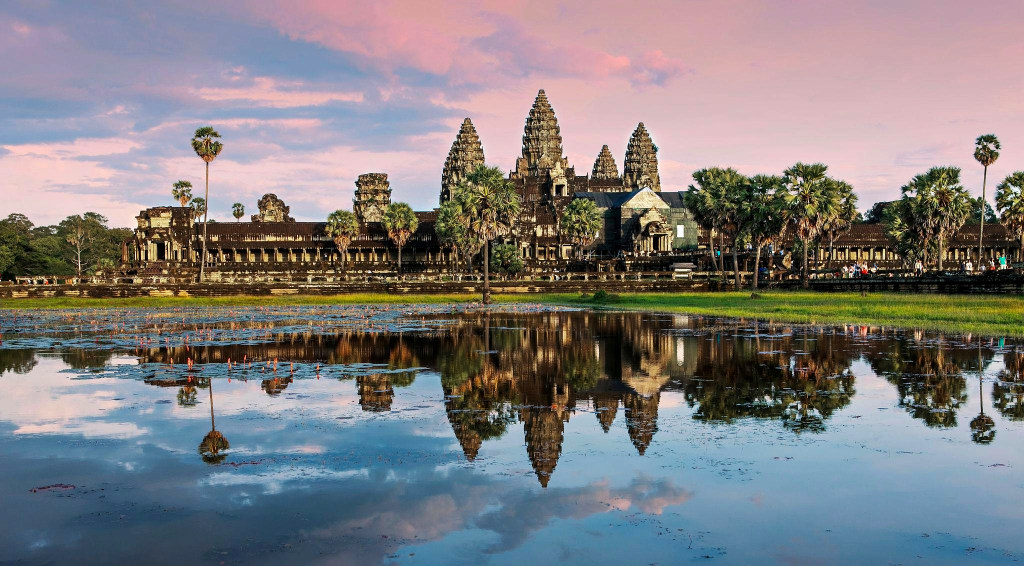
How Does The City Of Gods Awaken After Dark?
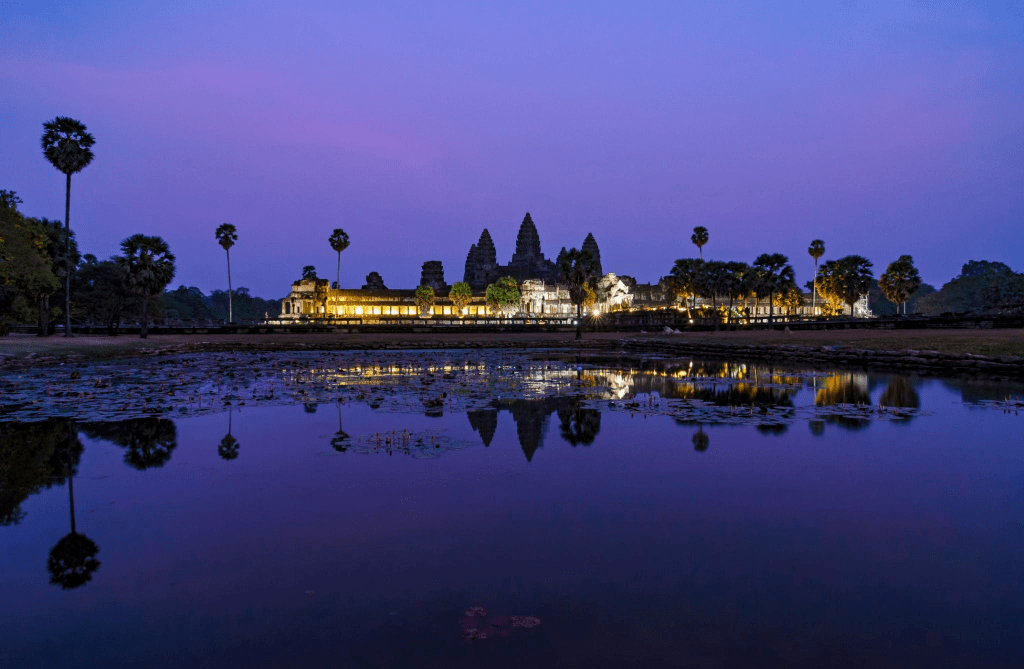
There are many extraordinary cultural landmarks around the world.
Some tell stories of love.
Others tell stories of power.
Some represent mystery.
But Angkor Wat is different.
Angkor Wat tells stories of mythology.
Hidden within the forests of Cambodia stands one of humanity’s greatest achievements.
A monumental temple complex surrounded by jungle.
A forgotten city reclaimed by nature.
A symbol of one of the most powerful civilizations in Southeast Asian history.
Whenever I look at Angkor Wat, I do not see a historic monument.
I see a stage.
A stage waiting for its stories to be told again.
And I often wonder:
What if Angkor Wat could awaken after sunset?
What if mythology could return through light?
What if one of the world’s greatest cultural treasures became a living canvas?
A Lost City Hidden In The Jungle
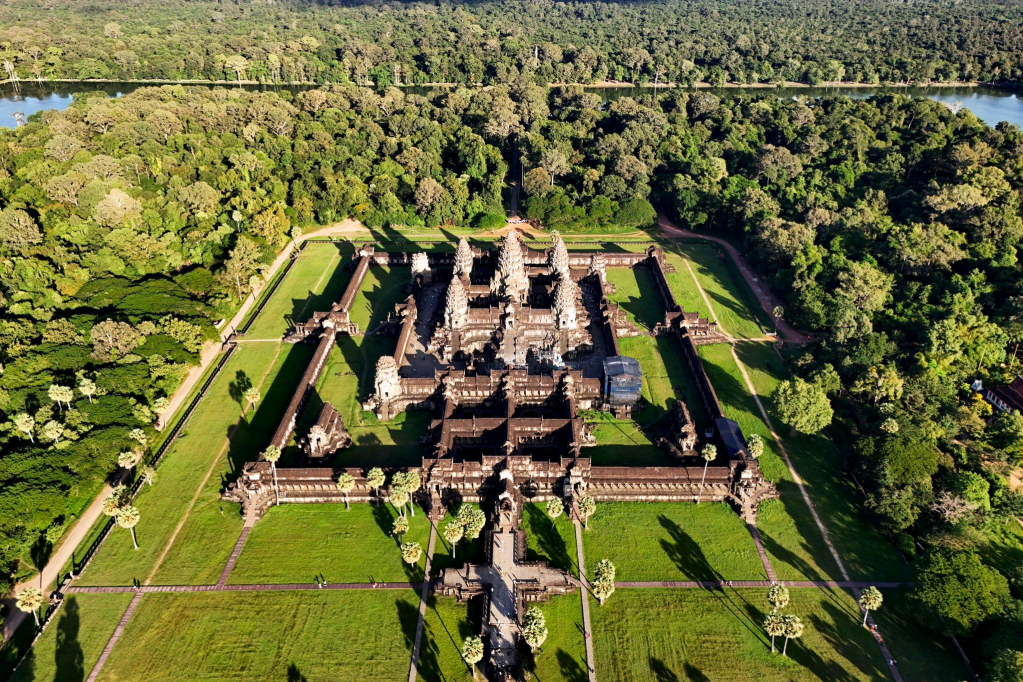
Angkor Wat was constructed in the early 12th century during the reign of King Suryavarman II of the Khmer Empire.
Originally dedicated to the Hindu god Vishnu, it later evolved into an important Buddhist temple.
But Angkor Wat was never simply a religious structure.
It was the heart of a vast civilization.
At its peak, the Angkor region supported one of the largest urban populations in the world.
Roads, canals, reservoirs, temples, and communities stretched across a massive landscape.
For centuries, it flourished.
Then slowly, the empire declined.
The city was abandoned.
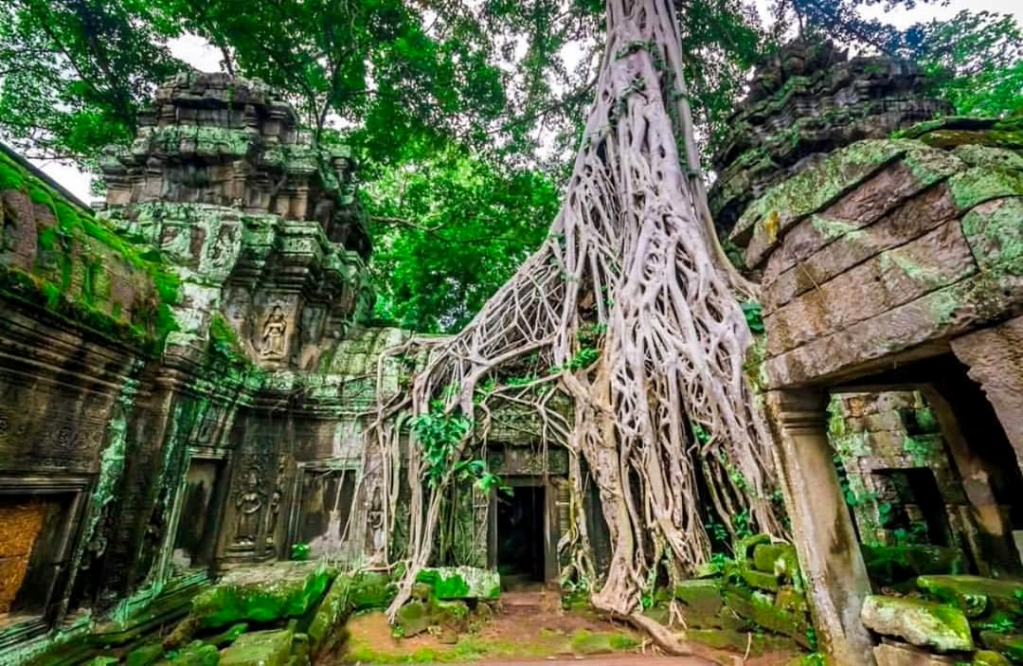
Nature reclaimed its streets.
Trees grew where people once lived.
Roots wrapped themselves around stone walls.
The jungle swallowed an empire.
Yet Angkor Wat survived.
Waiting silently for the world to rediscover it.
Stories Carved In Stone
One of the most remarkable aspects of Angkor Wat is its storytelling.
Its walls are covered with thousands of intricate carvings.
Kings.
Battles.
Mythological creatures.
Celestial dancers.
Gods and demons.
Entire narratives are preserved within stone.
The temple is not merely architecture.
It is a library.
A visual archive of Khmer civilization.
Visitors often admire the beauty of the carvings.
But these carvings were never intended to be decoration.
They were stories.
They were lessons.
They were cultural memory.
Imagine if modern technology could help those stories come alive once again.
Why Angkor Wat Is Perfect For Media Art
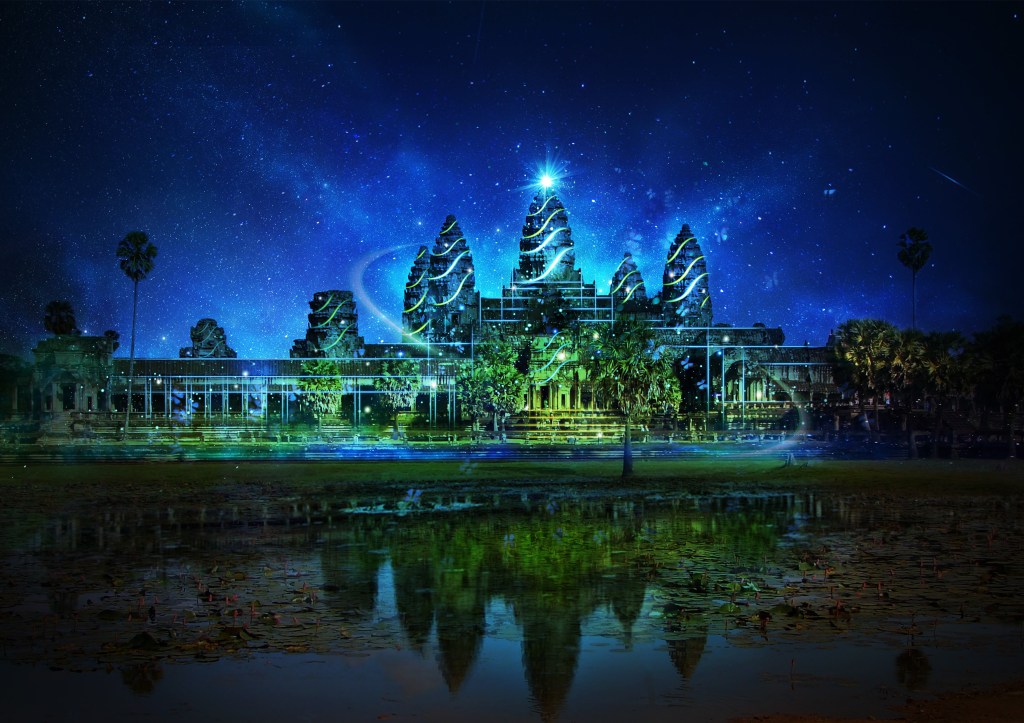
Throughout my career, I have worked on projection mapping, immersive experiences, and large-scale visual productions.
One lesson has remained constant.
Technology alone is never enough.
The most powerful experiences begin with storytelling.
Angkor Wat already possesses everything that great storytelling requires.
Mythology.
History.
Religion.
Nature.
Mystery.
Human achievement.
Very few places in the world combine all of these elements so naturally.
That is why I believe Angkor Wat has extraordinary potential as a cultural media art destination.
Light does not replace history.
It reveals it.
Technology does not compete with heritage.
It helps people connect with it.
If I Were The Creative Director
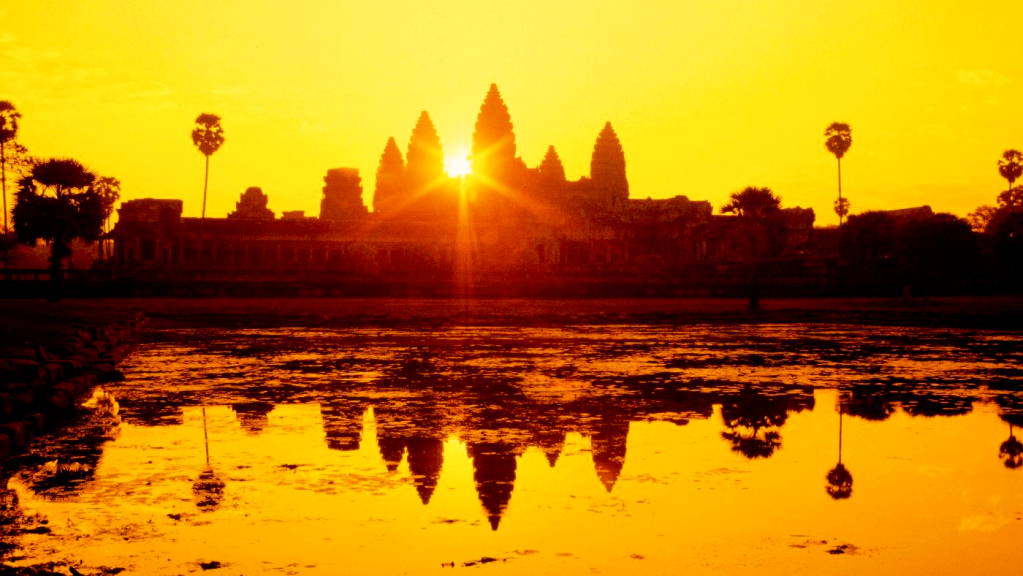
If I were invited to create a nighttime media art experience at Angkor Wat, I would begin with darkness.
Not spectacle.
Not noise.
Only silence.
Visitors would hear the sounds of the jungle.
Wind moving through ancient trees.
Birds in the distance.
The atmosphere of a forgotten world.
Then slowly, stars would appear above the temple.
A river of light would begin flowing across the stone.
The Khmer Empire would emerge from darkness.
Ancient cities would rise.
Temples would appear.
Civilization would return.
The celestial dancers known as Apsaras would come alive.
Figures carved into stone centuries ago would move once again through light and projection.
The gods Vishnu, Brahma, and Shiva would become part of a visual narrative connecting mythology and history.
The experience would not be about technology.
It would be about imagination.
It would be about allowing visitors to step inside a story.
The Future Of Tourism Begins At Night
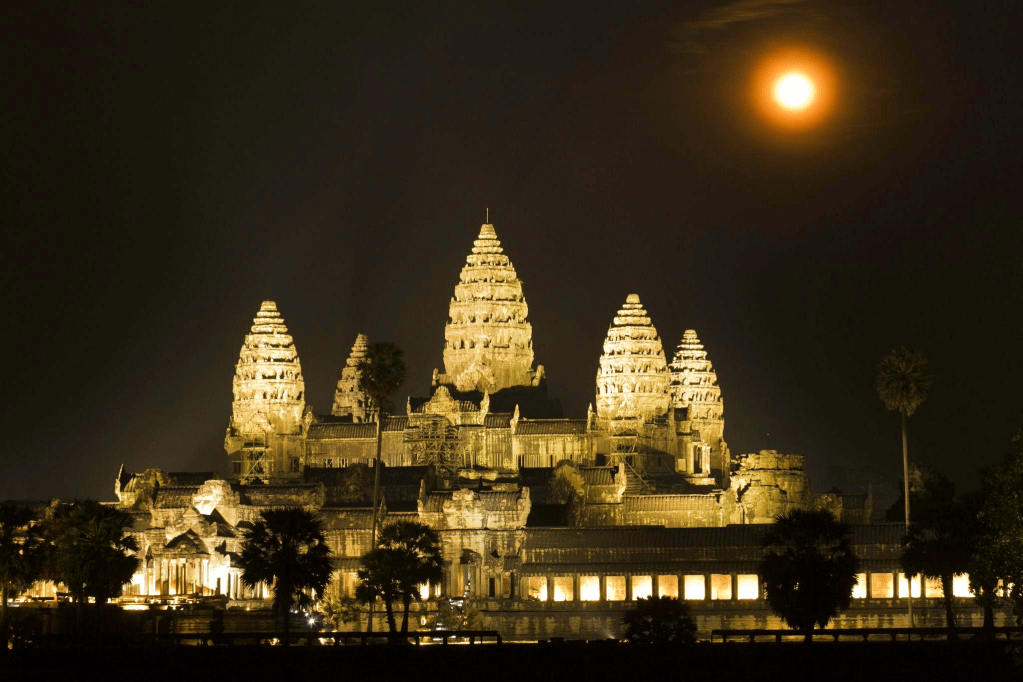
Tourism is changing.
In the past, people traveled to see landmarks.
Today, people travel to experience them.
The most memorable destinations are no longer defined only by architecture.
They are defined by emotion.
Storytelling.
Immersion.
Connection.
Cities around the world are investing heavily in nighttime economies because night offers something unique.
It creates atmosphere.
It creates emotion.
It creates memories.
Angkor Wat already attracts millions of visitors during daylight hours.
But after sunset, an entirely new layer of experience could emerge.
A layer built upon history, culture, and imagination.
IMMERSIVE LAB Perspective
The Taj Mahal tells a story of love.
The Great Pyramid tells a story of mystery.
Angkor Wat tells a story of mythology.
I believe the future of media art will not be about creating new monuments.
It will be about helping people rediscover the monuments that already exist.
The world’s greatest cultural treasures still have stories left to tell.
Technology simply provides a new language.
Angkor Wat is one of the most powerful examples of this possibility.
For centuries, the jungle protected its secrets.
But perhaps the next chapter belongs to light.
And when that first beam illuminates the ancient stone once again, the City of Gods may finally awaken after dark.
 IMMERSIVE LAB
댓글 남기기