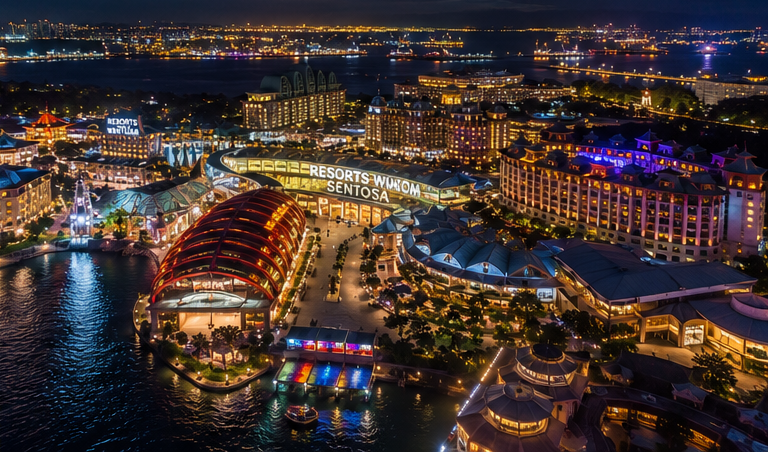
Why Sentosa Became Asia’s Most Successful Experience Island
When people think about Singapore, they often imagine a clean, efficient, and highly organized city.
They think about finance, technology, airports, and global business.
However, Singapore understood something important decades ago.
A city cannot rely only on business.
A city must also create memories.
That realization led to one of Asia’s most successful tourism developments:
Sentosa.
Today, Sentosa is not simply an island.
It is one of the world’s most carefully designed experience destinations.
Millions of visitors arrive every year not because of one attraction, but because of an entire ecosystem of experiences.
The success of Sentosa offers valuable lessons for cities, tourism developers, festival organizers, and entertainment creators around the world.
An Island Reinvented
Sentosa was not always a tourism destination.
For many years, the island served military purposes.
Its original role had little connection to entertainment.
But Singapore saw potential.
Instead of treating the island as unused land, planners imagined something larger.
They envisioned a destination where nature, entertainment, hospitality, culture, and technology could coexist.
This vision transformed Sentosa into a tourism engine that continues to generate enormous economic value today.
The lesson is simple.
Great destinations are rarely born.
They are designed.
Experience Before Attraction
Many tourism projects focus on individual attractions.
A large observation tower.
A famous museum.
A spectacular performance venue.
Sentosa took a different approach.
Instead of creating a single attraction, it created a complete visitor journey.
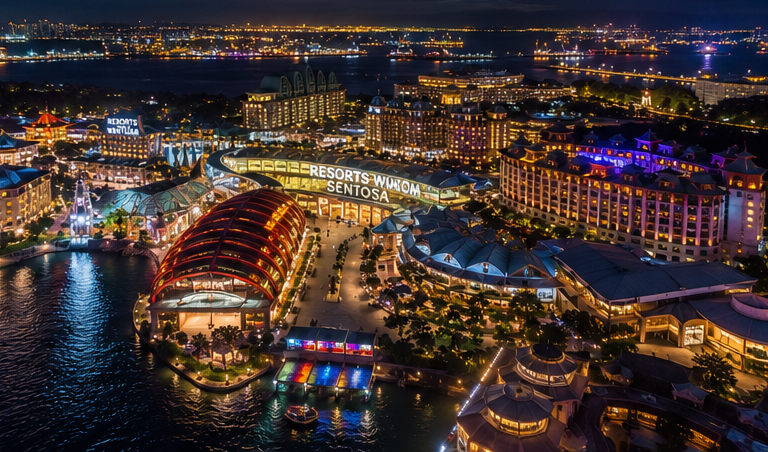
A guest can spend an entire day moving from beaches to immersive attractions, luxury resorts, themed entertainment, restaurants, and nighttime experiences.
Everything feels connected.
Every attraction strengthens the next attraction.
This ecosystem approach is one of Sentosa’s greatest achievements.
Visitors do not remember individual facilities.
They remember the overall experience.
Universal Studios Singapore
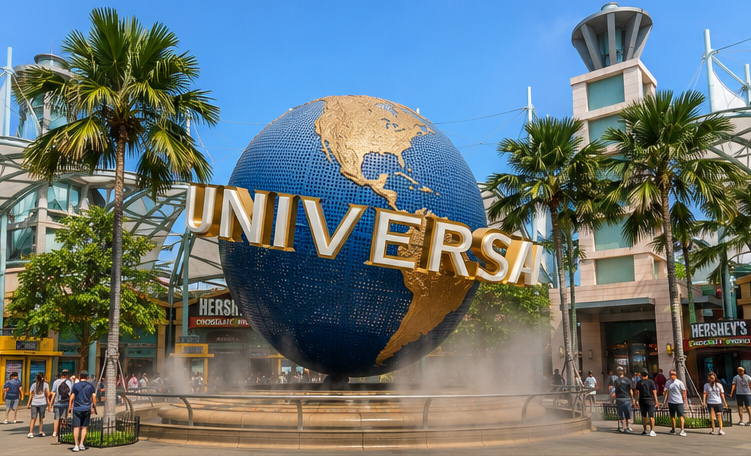
One of Sentosa’s most important milestones was the opening of Universal Studios Singapore.
The theme park immediately established Sentosa as a major entertainment destination.
However, the true impact went beyond attendance numbers.
Universal Studios increased the average length of visitor stays.
People who previously visited Singapore for business suddenly had another reason to remain longer.
Hotels benefited.
Restaurants benefited.
Retail businesses benefited.
The attraction became an economic catalyst for the entire island.
This demonstrates a powerful principle.
Successful attractions create value beyond their own ticket sales.
They stimulate surrounding experiences.
The Power Of Waterfront Experiences
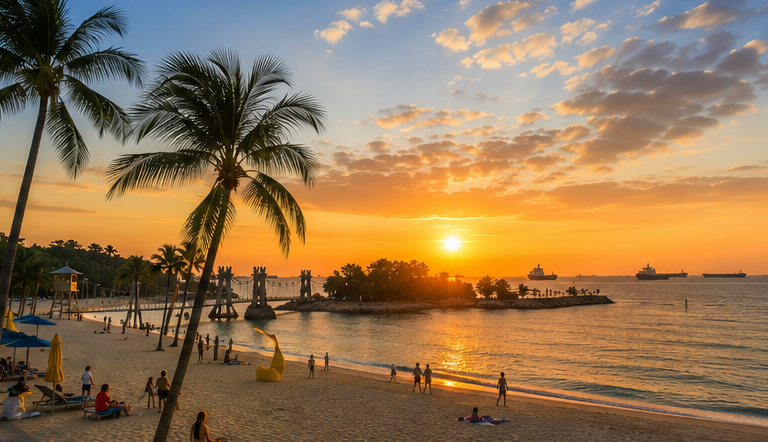
Unlike many urban destinations, Sentosa benefits from direct access to the sea.
Rather than treating the coastline as background scenery, planners integrated it into the visitor experience.
Beach clubs.
Waterfront restaurants.
Luxury hotels.
Outdoor events.
Nighttime light experiences.
These elements create emotional connections that traditional urban environments often struggle to achieve.
People may forget a building.
They rarely forget a sunset by the ocean.
Sentosa understands the emotional power of place.
Entertainment As Infrastructure
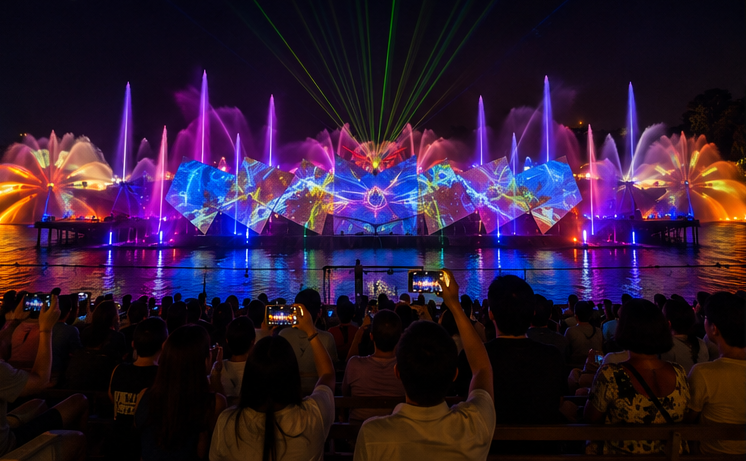
One of the most important lessons from Sentosa is that entertainment is not decoration.
Entertainment is infrastructure.
Governments often invest in roads, airports, bridges, and public transportation.
Singapore invested in experiences.
It understood that memorable destinations attract visitors, investors, businesses, and global attention.
Entertainment became an economic strategy.
Tourism became a development strategy.
Experience became a national asset.
This way of thinking has influenced destinations throughout Asia and the Middle East.
What Other Cities Can Learn
Cities around the world are now competing for attention.
Every city can build hotels.
Every city can build shopping centers.
Every city can construct convention halls.
What is increasingly difficult is creating emotional identity.
Sentosa succeeded because it created a clear emotional promise.
Visitors know what they will find.
Fun.
Relaxation.
Discovery.
Entertainment.
Connection.
The island delivers this promise consistently across every touchpoint.
That consistency creates trust.
And trust creates return visitors.
IMMERSIVE LAB Perspective
The future of tourism is moving beyond sightseeing.
People no longer travel simply to see places.
They travel to feel something.
Sentosa recognized this transformation early.
It became a destination designed around emotions, experiences, and memories.
For tourism developers, festival organizers, and city planners, the message is clear.
The future belongs to destinations that create experiences people cannot find anywhere else.
In the coming decades, the most successful cities may not be the tallest, richest, or largest.
They may be the cities that understand how to design unforgettable experiences.
And Sentosa remains one of the best examples in the world.
 IMMERSIVE LAB
댓글 남기기