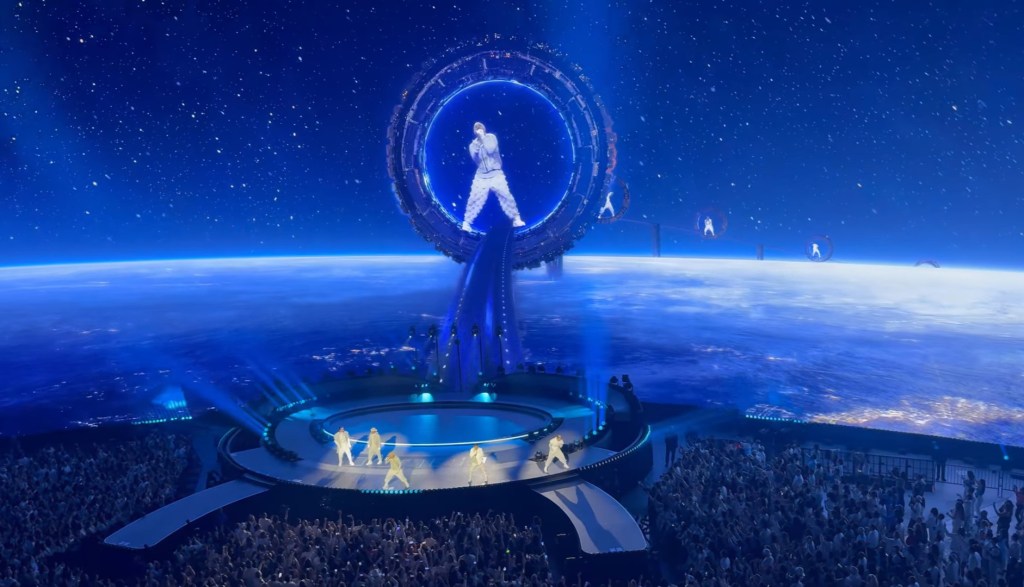
Why The Most Successful Experiences Create Worlds, Not Events
For decades, the entertainment industry focused on producing events.
Concerts.
Festivals.
Exhibitions.
Theater performances.
Success was often measured by ticket sales, attendance numbers, and media coverage.
An event happened.
People attended.
The event ended.
The relationship between the audience and the experience was temporary.
Today, that model is changing.
The most successful entertainment brands in the world are no longer creating events.
They are creating worlds.
Events End. Worlds Continue.
An event has a beginning and an end.
A world does not.
This distinction is becoming one of the most important ideas in modern entertainment.
People may attend a concert for three hours.
But they can remain emotionally connected to a world for decades.
This is why audiences return again and again to certain brands, stories, and destinations.
They are not simply consuming content.
They are participating in a universe.
The future belongs to experiences that continue beyond the moment itself.
Disney Understood This Before Anyone Else
Long before the term “immersive experience” became popular, Disney understood the power of world-building.
Visitors do not travel across the world merely to ride attractions.
They travel to enter a world.
Every building, sound, costume, pathway, and visual element contributes to a larger story.
Guests become participants rather than spectators.
This is why Disney remains one of the most powerful entertainment brands in history.
Disney does not sell rides.
Disney sells worlds.
The New Generation of Entertainment
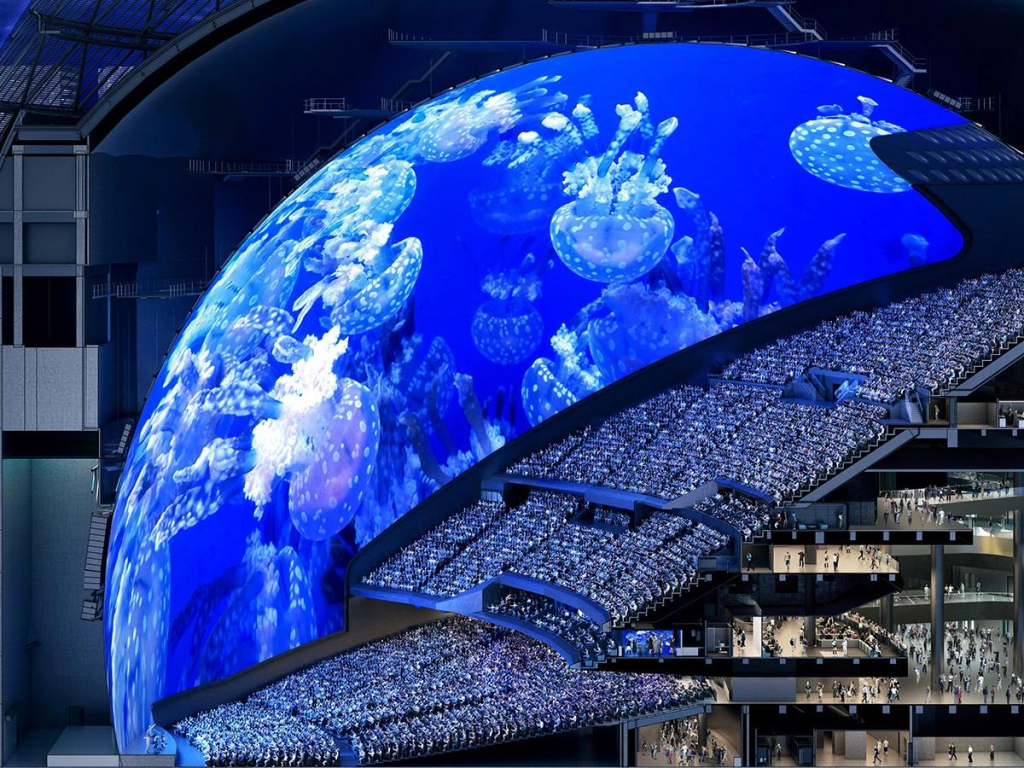
Today, a similar transformation is happening across the entertainment industry.
The Sphere in Las Vegas is more than a venue.
Immersive art exhibitions are more than galleries.
Esports arenas are more than competition spaces.
Media art festivals are more than public events.
Each represents an attempt to create a complete environment that surrounds the audience.
The objective is no longer to present content.
The objective is to create presence.
People want to feel transported.
They want to step into a different reality.
Why Traditional Venues Are Evolving
For decades, venues were designed around visibility.
The audience faced the stage.
The performer occupied the center.
Everything was organized around observation.
Future venues are being designed around immersion.
The audience is no longer positioned outside the experience.
The audience becomes part of the experience itself.
This shift is influencing architecture, technology, storytelling, and spatial design.
The venue becomes a living narrative.
Every surface can communicate.
Every sound can contribute.
Every space becomes part of the story.
The Rise of World Experiences
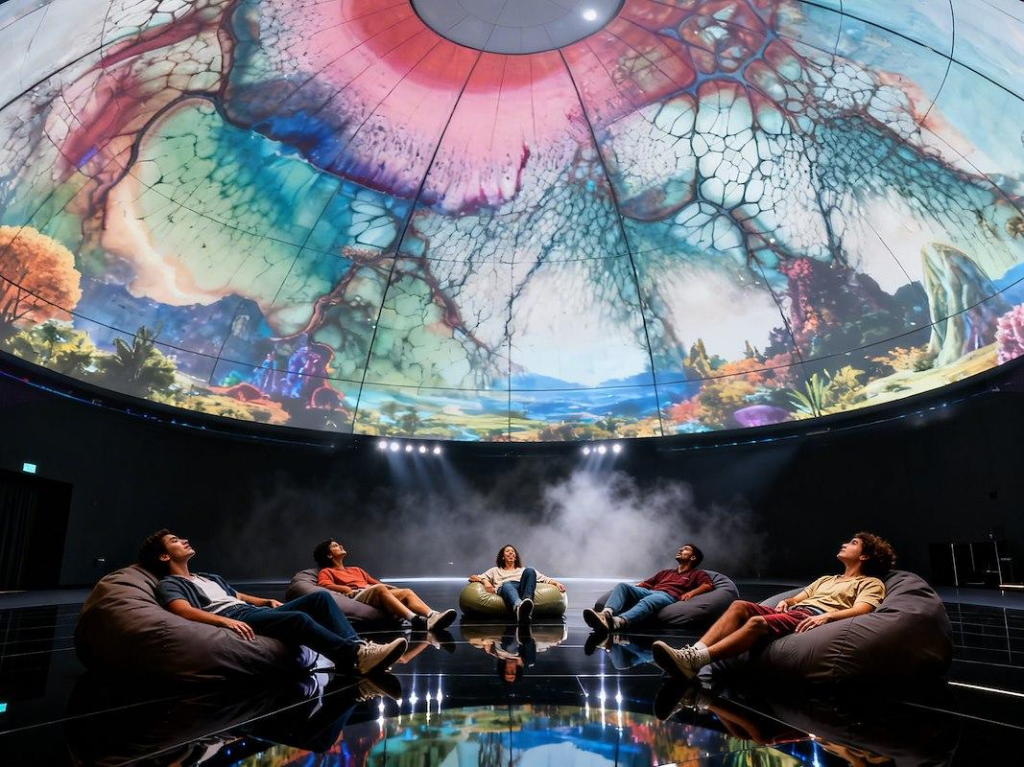
The next generation of entertainment destinations will not compete through scale alone.
They will compete through the strength of their worlds.
Imagine entering a dome that becomes an underwater kingdom.
A media art space that transforms into a futuristic city.
An arena that evolves into a digital universe.
A festival that feels like stepping into another civilization.
These are not events.
These are worlds.
And people are increasingly willing to travel, spend, and return for experiences that allow them to inhabit those worlds.
Technology Is Only A Tool
Many discussions about the future focus on technology.
LED displays.
Artificial intelligence.
Projection mapping.
Virtual reality.
These technologies are important.
But they are not the destination.
Technology is simply the tool that makes world-building possible.
The true goal is emotional connection.
The audience does not remember the resolution of a screen.
They remember how they felt.
The most successful experiences create wonder.
Curiosity.
Excitement.
Belonging.
Memory.
That is the real product.
Why World-Building Matters
World-building creates something that events cannot.
Continuity.
A strong world can expand into new stories, new experiences, new attractions, and new communities.
It can evolve for years.
Sometimes for generations.
This makes world-building one of the most powerful strategies in modern entertainment.
The future will belong to creators who understand how to build emotional ecosystems rather than temporary spectacles.
IMMERSIVE LAB Perspective
At IMMERSIVE LAB, we believe the future of entertainment extends far beyond stages and screens.
The next generation of venues, domes, arenas, festivals, and media art destinations will be judged not by the technology they contain but by the worlds they create.
People no longer buy tickets to events.
They buy access to worlds.
The future of entertainment is not content.
It is not technology.
It is world-building.
And the most successful creators of the future will be those capable of transforming spaces into unforgettable worlds.
 IMMERSIVE LAB
댓글 남기기